
Xona Space Systems Prepares to Launch Commercial Alternative to GPS
Xona Space Systems is preparing to introduce a commercial satellite navigation service designed to provide greater precision than traditional Global Positioning System technology.
The company plans to launch six satellites that will form the foundation of its Pulsar navigation network.
The service aims to address limitations associated with existing satellite navigation systems, including vulnerability to interference and insufficient precision for some emerging applications.
Founded in 2019 by a team of engineers who met while studying aerospace engineering at Stanford University, Xona was established to explore the potential of low Earth orbit satellites to improve navigation and timing services.
Its founders identified opportunities to develop a stronger and more accurate alternative to conventional GPS signals, which are widely used for transportation, agriculture and numerous other industries.
Chief Executive Officer Brian Manning said the commercial opportunity lies not in charging for a service that governments already provide for free, but in supplying the improved performance needed by billions of connected devices.
Developing the technology required the company to overcome several technical challenges, including maintaining accurate time without relying on expensive atomic clocks aboard every satellite.
Xona also designed its system to work with existing GPS receivers through relatively simple software modifications, potentially reducing the cost and complexity of adoption.
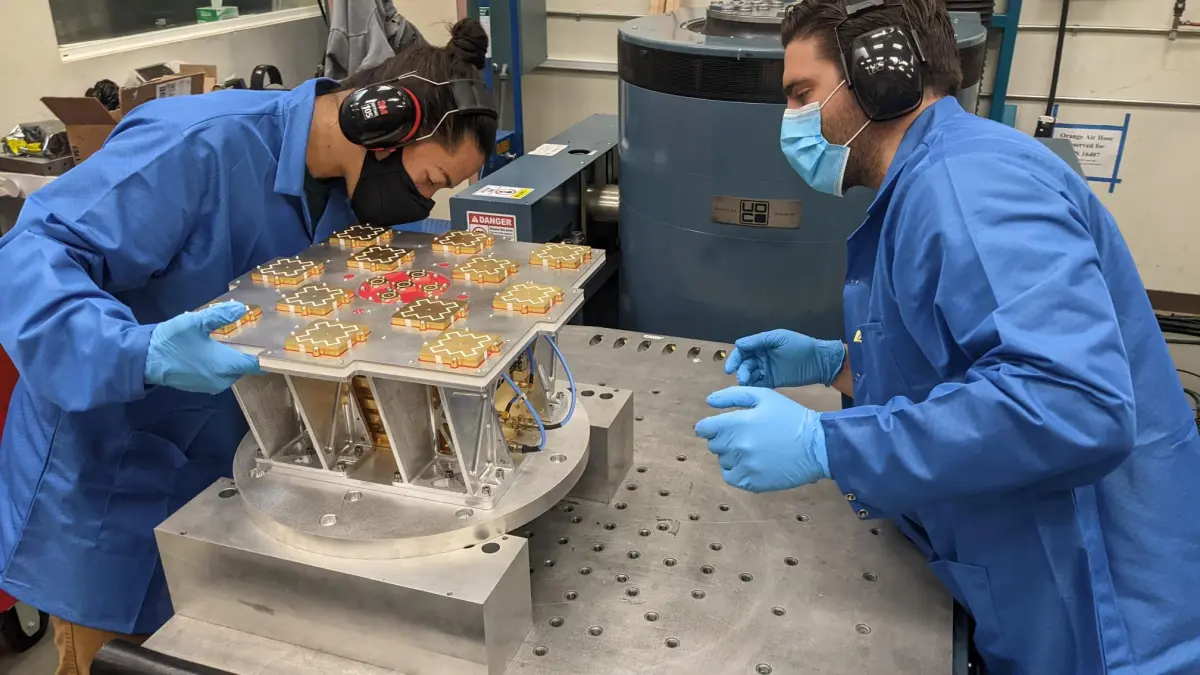
The six satellites scheduled for launch include four based on a platform developed with Aerospace Labs and two built entirely by Xona at its headquarters in Burlingame, California.
The company’s planned Pulsar constellation, which is expected to eventually comprise 258 satellites, aims to provide centimetre level positioning accuracy compared with the metre level accuracy commonly associated with GPS.
Xona also says its stronger signals could improve reception in urban areas and inside buildings while making the service more resistant to jamming and spoofing.
Once the initial satellites are operational, the company plans to begin beta testing with customers. It hopes to achieve full coverage across the United States, Europe, Japan and South Korea by 2028.
Xona has raised more than $300 million from investors since its establishment, including $20 million from the United States Space Force.
Its technology could support a wide range of applications, from precision agriculture and electronic timing to autonomous vehicles and aviation.
The growing use of satellite interference in international conflicts has also increased interest in more resilient navigation systems.
Xona believes its service could become an important part of future transportation infrastructure by providing reliable positioning information for technologies that require exceptionally accurate navigation and timing.
Source: TechCrunch

news via inbox
Get the latest updates delivered straight to your inbox. Subscribe now!