Trump’s Role in Jensen Huang’s Return Raises Questions About Corporate Independence, AI Power
By Victory Bernard
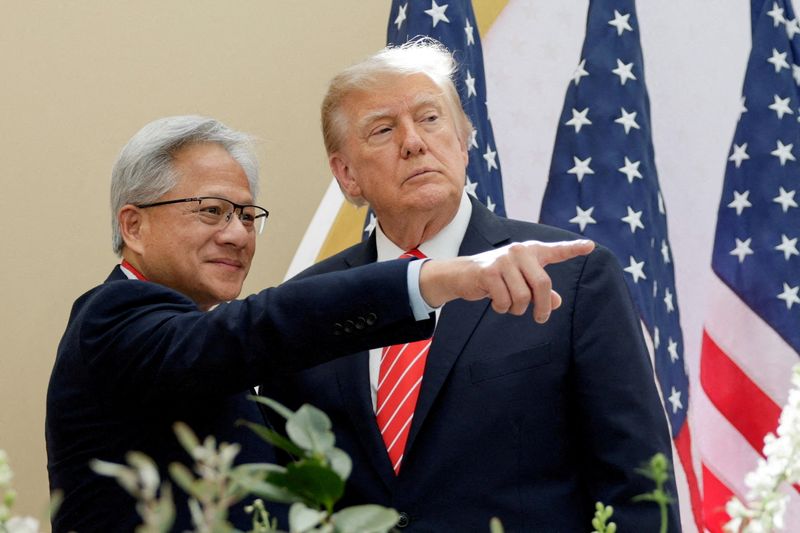
Pesident Donald Trump’s intervention in NVIDIA’s leadership crisis has drawn renewed attention to the growing intersection of political influence, corporate governance and America’s artificial intelligence ambitions, following the reinstatement of Jensen Huang as chief executive.
Trump publicly welcomed the board’s decision on Monday, November 23, describing it as the “correct and proper decision” and saying Huang’s leadership was important to the company and the American economy.
In a post on Truth Social, Trump wrote: “The NVIDIA Board of Directors has made the correct and proper decision to return Jensen Huang to the position of CEO. The Country needs Jensen’s leadership at NVIDIA in order to ensure the Success and Prosperity of not only the Company, but the American Economy.”
He added that the U.S. government had “no reason to believe that Jensen’s return to NVIDIA poses any risk to National Security,” while stating that the Attorney General had confirmed that the government did not possess evidence of unlawful conduct by Huang.
Trump also described the NVIDIA chief as “a Great Patriot and National Treasure.”
The president, however, went beyond publicly endorsing the board’s decision, revealing in an interview with CNBC that he had personally spoken to board members and played a role in persuading them to reinstate Huang.
“I spoke to them. Let me put it this way: And I convinced them. I made the deal,” Trump said.
He added that he had been speaking to the board “directly and indirectly” and felt strongly about Huang’s return, particularly as he considered NVIDIA an important part of the country.
According to Trump, the board sought assurances regarding national security concerns before making its decision.
“They did ask for assurance on the national security threat, and we gave them assurance, at least with everything we know, and we know a lot,” he said.
Trump also defended the importance of retaining Huang, arguing that losing his expertise could be more damaging than the concerns surrounding the controversy.
“But I can tell you the bigger threat would be losing the brain power of somebody like Jensen. That would be a threat to me. That would be a far bigger threat than anything we’re talking about,” Trump said.
The intervention raises questions about the extent to which government officials and political leaders may influence decisions involving companies that have become strategically important to national economic and technological interests.
NVIDIA, whose advanced chips power much of the global artificial intelligence infrastructure, has become a central player in the competition for AI dominance between the United States and China.
Its importance to the industry may have strengthened the case for Huang’s return, but the board’s decision has also attracted scrutiny from lawmakers who want further answers regarding national security concerns, export-control compliance and the circumstances surrounding the reinstatement.
NVIDIA announced that its board voted unanimously to reinstate Huang as president, CEO and board director.
The company said the board had received input from senior levels of the U.S. government and, based on that information, was confident that Huang’s reinstatement posed no national security risk.
The company also confirmed that an investigation into reported foreign intelligence efforts targeting Huang would continue.
Trump, while endorsing the reinstatement, called on NVIDIA to continue its internal investigation into compliance with U.S. export controls.
“NVIDIA should continue its thorough internal investigation of the Company’s compliance with U.S. export controls in order to ensure that it is fulfilling its legal obligations and Patriotic Duty to protect U.S. National Security,” he wrote.
The controversy has prompted calls from lawmakers on both sides of the political divide for further scrutiny, including questions about the government’s involvement in the board’s decision and NVIDIA’s compliance with export-control regulations.
Huang’s return may have restored leadership stability at one of the world’s most influential technology companies, but Trump’s role in the reversal has transformed the episode into a broader debate about corporate independence and the influence of government in the AI industry.
As artificial intelligence becomes increasingly tied to economic competitiveness and national security, NVIDIA’s leadership crisis may offer an indication of how corporate decisions involving strategically important technology companies could increasingly intersect with government priorities.

news via inbox
Get the latest updates delivered straight to your inbox. Subscribe now!