
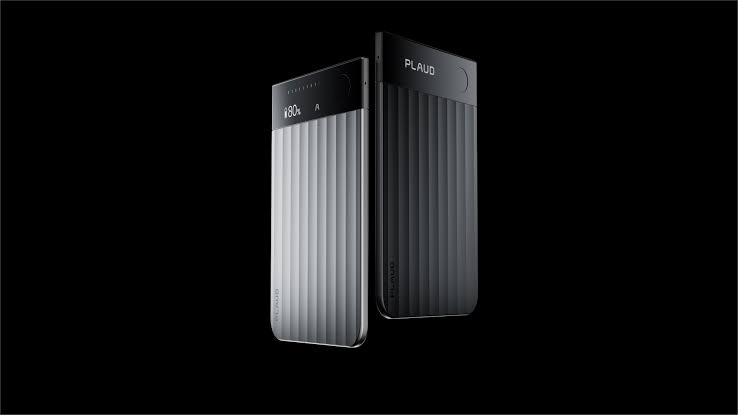
Plaud Note Pro Carves a Niche as Slim AI Recorder for Professionals
In a market crowded with experimental AI wearables, Plaud is quietly charting a different course. While devices such as Omi, Bee and Friend focus on conversational AI experiences—and as questions remain about the long-term success of wearable AI—Plaud has found traction by prioritising a practical, professional use case: reliable voice recording in an ultra-slim form factor.
The company’s latest device, the Plaud Note Pro, reflects this strategy. Shaped like a credit card and thin enough to slide into a wallet, the AI-powered recorder is designed for users who attend frequent meetings, interviews and conferences. Plaud says it has shipped over one million units globally, with more than half of its customers upgrading to paid professional subscriptions.
Launched for pre-order in August, two years after the original Plaud Note, the Note Pro is priced at one hundred and seventy-nine United States dollars. After several weeks of daily use, the device has proven to be a convenient addition to everyday work routines, largely due to its minimalist design and independence from smartphones.
At just zero point one two inches thick—roughly the width of three stacked credit cards—the Plaud Note Pro is among the thinnest AI recording devices currently available. Weighing only thirty grams, it can be carried in a wallet without noticeable bulk. Plaud includes a wallet-style pouch and a magnetic ring accessory that allows the recorder to attach to MagSafe-enabled smartphones, offering flexible placement during meetings or interviews.
Unlike many AI wearables, the Note Pro does not require a constant connection to a phone to function. It features sixty-four gigabytes of onboard storage, enabling users to record hours of audio before transferring files or syncing with cloud services. This standalone capability sets it apart in a category where many devices rely heavily on companion apps.
Audio capture is handled by four MEMS microphones designed to pick up sound from all directions. Although Plaud lists the effective recording range at just over sixteen feet, real-world use—including conference sessions recorded from a distance—has delivered clear and usable audio. A dedicated voice processing unit supports noise reduction, voice isolation and echo cancellation.
Battery performance is another strong point. In mixed usage—covering interviews, conference sessions, phone call recordings and personal notes—the device retained more than half its charge after two weeks. According to Plaud, the Note Pro supports up to thirty hours of continuous recording and as much as sixty days on standby. Charging is done via a proprietary dock connected through a USB-C cable, with a full charge taking approximately two hours.
To address common concerns around transparency and consent in audio recording, the Note Pro includes a small display that clearly shows recording status and battery level. Users receive haptic feedback when starting or stopping a recording, and a physical button allows key moments to be highlighted in real time for emphasis in AI-generated summaries. These visual and tactile cues also make it easier to signal to others that a session is being recorded.
On the software side, Plaud offers three hundred minutes of free transcription each month, with options to export recordings to third-party transcription or AI note-taking services. The platform supports customisable AI-generated notes through templates tailored to different professional needs, and users can create their own formats. Transcription accuracy is generally reliable, and recordings, transcripts and summaries can now be accessed via a web interface.
While pendant-style or pin-based AI recorders may be easier to wear, Plaud’s card-sized approach delivers stronger microphones and more flexible placement options. For professionals who spend significant time in face-to-face meetings, interviews or conferences, the Plaud Note Pro positions itself as a focused, utilitarian tool in an otherwise experimental AI hardware landscape.
Source: Techcrunch

news via inbox
Get the latest updates delivered straight to your inbox. Subscribe now!