
Reservoir Raises $8 Million to Reinvent Water Heater for Homes, Power Grid
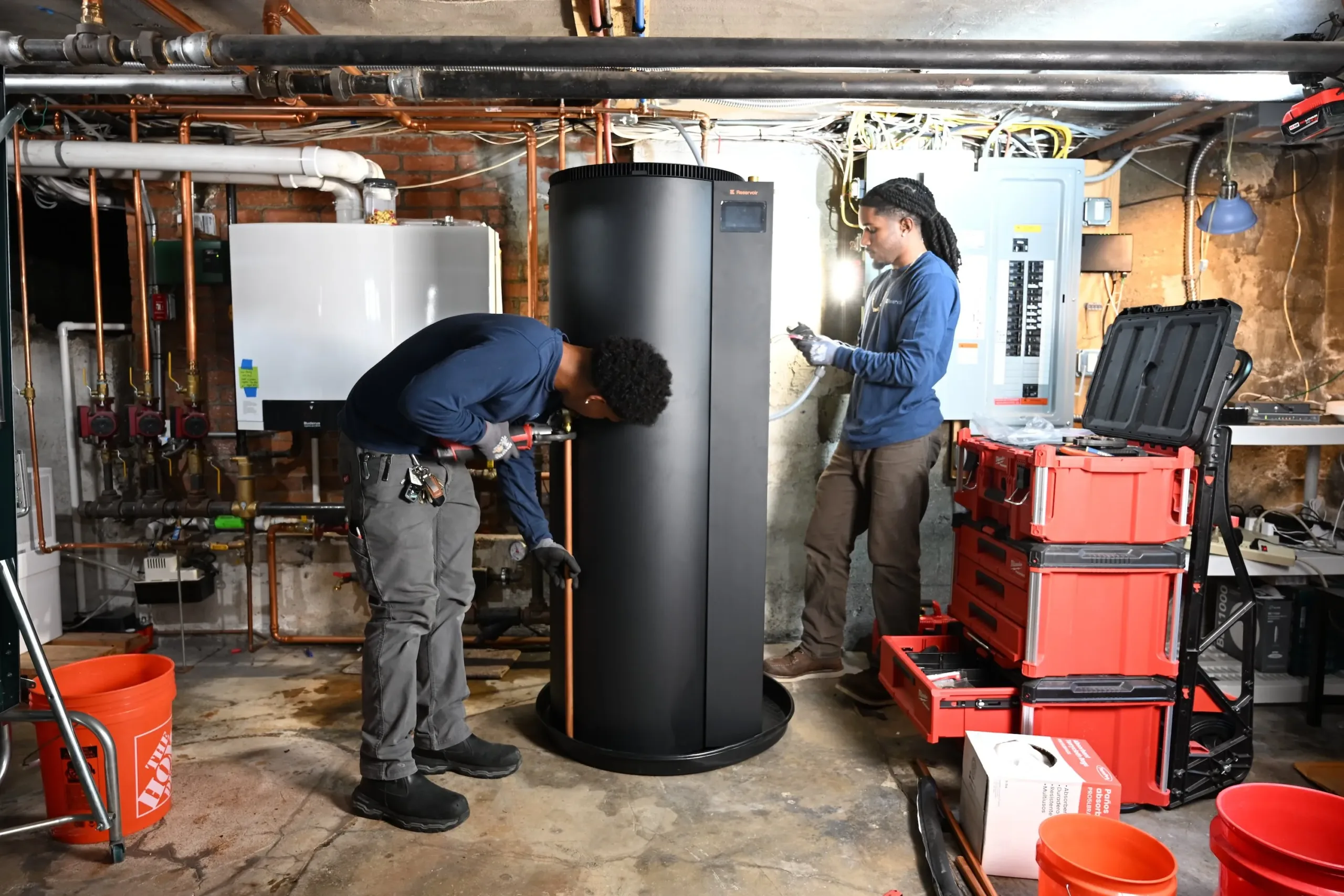
Reservoir, a startup developing smarter and more energy-efficient water heaters, has raised $8 million in seed funding as it seeks to modernize an appliance that consumes a significant share of household energy.
The company was founded by Luke Winston-Almanzar, former chief business officer at 3D-printing company Formlabs, alongside Gabriel Parisi-Amon and Jake Felser.
Winston-Almanzar said conventional water heaters are largely unintelligent and can consume more energy than many homeowners realize.
Reservoir’s latest funding round was led by Asymmetric Capital Partners, with participation from Founder Collective and MCJ.
The company plans to use the capital to expand installations around Boston, its initial market. Reservoir has installed about 100 units so far and aims to reach approximately 1,000 installations by the end of next year
The company believes its technology can benefit both households and electricity providers. Unlike conventional systems that primarily respond to water temperature, Reservoir’s heater uses software to learn household consumption patterns and predict when hot water will be needed.
It can then heat water when electricity demand and prices are lower. Its heat-pump technology is also designed to be considerably more efficient than traditional electric and gas water heaters.
By storing energy as hot water, Reservoir believes a large network of its units could eventually provide valuable flexibility to the power grid.
The company is exploring participation in utility demand-response programmes, which compensate large energy users for reducing consumption during periods of high demand.
Reservoir hopes such payments could eventually help lower the cost of its products for consumers. Beyond energy efficiency, Reservoir has added features intended to make its products more attractive to homeowners.
During the first month of operation, the system studies household water-use patterns and uses that information to optimize heating schedules.
The water heater also includes an ultrasonic flow sensor designed to identify possible plumbing leaks and notify homeowners through a mobile application.
The higher-end Max model adds a recirculation valve for faster access to hot water and a mixing valve designed to help protect plumbing during freezing conditions.
The 50-gallon Max model can also provide up to 150 gallons of hot water when its party mode is activated, either through the unit’s touchscreen or the accompanying app.
Reservoir has taken an additional step by establishing its own plumbing operation. The company says the approach is intended to simplify sales and installation while allowing it to maintain a direct relationship with customers.
The Max model is priced at $6,500, while the Core model costs $5,000, with installation included. Massachusetts residents can qualify for a $1,050 rebate, reducing the effective purchase price.
According to the company, the Core model can compete with the cost of other heat-pump water heaters when installation and available incentives are considered.
Reservoir also estimates that typical Boston-area households could save as much as $1,000 annually in energy costs, while the product is backed by a 10-year warranty.
Reservoir is entering a market where heat-pump water heaters have struggled to gain widespread adoption despite their potential energy benefits.
The company’s strategy is to combine efficiency, automation, and practical household features in an effort to make cleaner technology a more compelling consumer product.
Source: TechCrunch

news via inbox
Get the latest updates delivered straight to your inbox. Subscribe now!