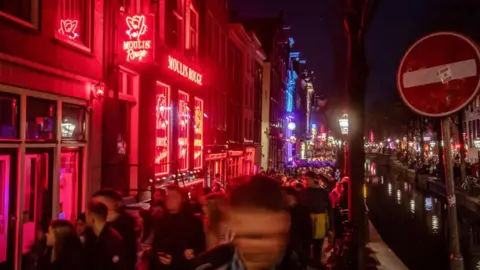
From London’s Red-Light District to a Global AI Hotspot
King’s Cross in London has undergone one of the most dramatic transformations in the city’s recent history, evolving from an area once associated with crime and prostitution into one of Europe’s leading centers for artificial intelligence.
The neighborhood has become so attractive to AI companies that securing office space there is reportedly becoming increasingly competitive. Some investors are even said to be using access to King’s Cross offices as an incentive when attempting to attract promising startup founders.
The transformation gained momentum in 2016, when DeepMind, following its acquisition by Google, established a major presence in the area. Its arrival helped attract a growing number of AI startups and technology companies seeking proximity to DeepMind’s researchers and the wider concentration of technical talent.
Today, King’s Cross forms part of what is commonly referred to as London’s “Knowledge Quarter.” The area has attracted major technology and AI companies including OpenAI, Meta, Isomorphic Labs, Cusp AI, Wayne and Recursive, while Synthesia and Anthropic are also located nearby.
The neighborhood’s appeal extends beyond its technology ecosystem. University College London is close by, while restaurants and other lifestyle businesses have contributed to the area’s growing appeal among technology workers and entrepreneurs.
Its transport connections also provide a major advantage. King’s Cross offers fast rail links to Cambridge, allowing companies to access one of the United Kingdom’s most important academic and technology talent pools. International connections also make it possible to reach Paris within roughly two hours. The neighborhood’s current status is particularly striking given its history.
During the 1980s, King’s Cross was known as one of London’s more troubled districts. Drug-related crime was widespread, and the area was associated with prostitution, gangs and social deprivation. Local investor Hussein Kanji of Hoxton Ventures has recalled seeing evidence of drug use and criminal activity throughout the neighborhood.
The area began a major redevelopment process in the early 2000s, with large-scale real estate investment gradually changing its character. More than two decades later, the transformation has been remarkable.
Kanji described the development as a dramatic change, noting that the same neighborhood that once struggled with severe social problems has become one of the United Kingdom’s leading AI centers.
The growth continues to attract startups. BioCorteX, for example, moved from Holborn to the Jellicoe building in King’s Cross about 18 months ago to position itself closer to London’s growing technology ecosystem.
BioCorteX co-founder Nik Sharma said the company was attracted by the growing number of major technology and cloud companies establishing operations in London.
The area could see even more growth as additional technology firms consider moving into the neighborhood. Among those reportedly exploring a presence there is Prometheus, an AI company associated with Jeff Bezos.
King’s Cross therefore stands as a striking example of how investment, technology, infrastructure and urban redevelopment can completely reshape a neighborhood.
Source: TechCrunch

news via inbox
Get the latest updates delivered straight to your inbox. Subscribe now!