
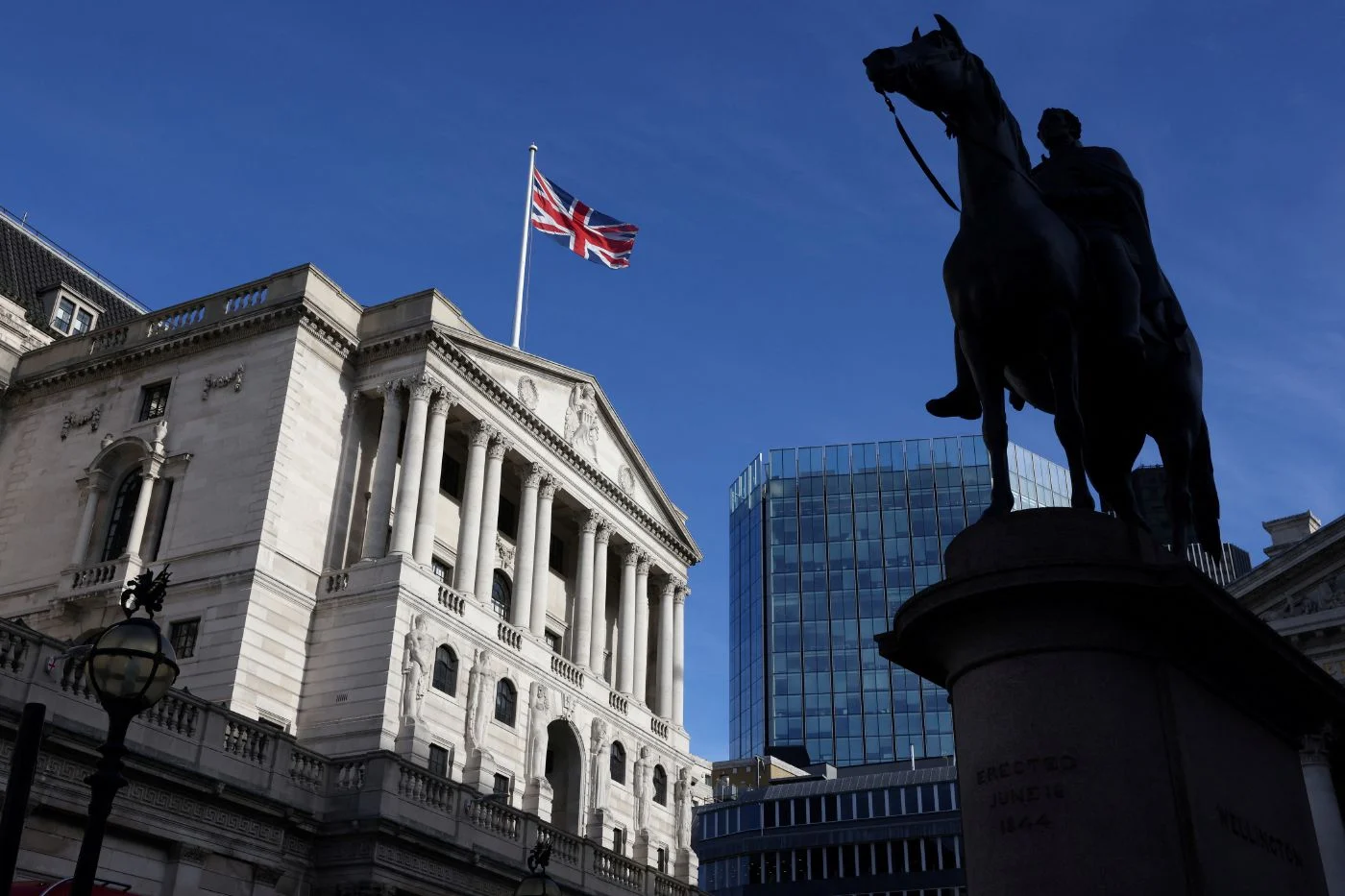
Bank of England Poised to Cut Interest Rates as Inflation and Growth Slow
The Bank of England is widely expected to announce an interest rate cut today, a response to slowing inflation and fragile economic growth that has weighed on British markets and consumer confidence. Reports indicate the bank will reduce the benchmark rate, potentially to 3.75 %, following data showing inflation cooling sharply and economic momentum softening. This anticipated move reflects policymakers’ attempts to support borrowing and investment as inflation nears target levels and wage pressures ease. The expected decision comes amid divided views within the Monetary Policy Committee, with recent inflation figures strengthening the case for easing. Sterling remained relatively steady ahead of the announcement, though markets are fully pricing in the prospective rate reduction.
Investors have reacted to the prospect of lower borrowing costs with mixed sentiment, as softer rates can stimulate economic activity but also reflect deeper weakness in the economy. A rate cut could make mortgages and business loans cheaper, encouraging spending and investment, but analysts warn that over-easing risks asset bubbles. The last UK inflation data showed a sharper drop than expected, reinforcing pressure on the Bank to act pre-Christmas. Some economists predict additional cuts in 2026 if growth remains subdued and labour market conditions weaken further.
Global markets have been watching the BoE alongside other major central banks; the European Central Bank is widely expected to hold rates steady today as euro-area inflation hovers near its target and resilience continues. Meanwhile, traders are anticipating decisions from the Bank of Japan, which may tighten policy further, underscoring divergent global monetary conditions. Such divergence influences capital flows, foreign exchange rates and investor allocation between regions. There is particular focus on the pound’s performance and UK asset attractiveness post-cut.
Business leaders and consumers in the UK are closely monitoring the BoE’s move, as borrowing costs influence budgeting, corporate investment decisions and housing markets. Lower rates could ease pressures on households struggling with cost-of-living constraints, yet could also dampen returns for savers and pension funds. The timing — on the eve of year-end economic reporting — could signal broader policy direction heading into 2026. Some analysts argue that without clear signs of robust growth, further monetary support may be required.
For the global financial community, the BoE’s expected cut is part of a larger narrative of central banks balancing inflation control with growth support amid uneven global recovery. With the U.S. Federal Reserve likewise under pressure to consider rate adjustments based on labour and inflation data, coordinated policy shifts may shape investment strategies next year. Investors will be watching closely for official announcements later today.
Source: Reuters.

news via inbox
Get the latest updates delivered straight to your inbox. Subscribe now!