
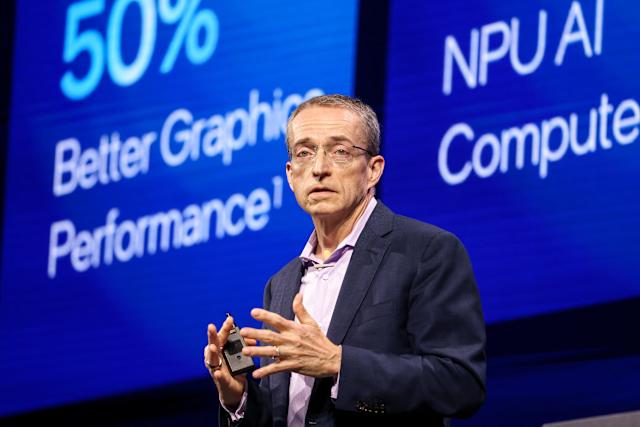
Pat Gelsinger Teams with U.S. Government to Revive Moore’s Law Through Startup xLight
A year after leaving Intel, Pat Gelsinger, the former CEO of the chipmaking giant, is once again at the forefront of the semiconductor industry—but on a new battlefield.
As a general partner at venture firm Playground Global, Gelsinger is involved with ten startups, but one, xLight, has captured his primary focus.
Last Monday, xLight announced a preliminary agreement with the U.S. Commerce Department for up to $150 million in funding, with the government poised to become a significant shareholder.
The deal underscores both Gelsinger’s enduring influence in the industry and a broader trend raising eyebrows in Silicon Valley: the federal government taking equity stakes in strategically important technology companies.
California Governor Gavin Newsom expressed the unease at a recent public event, asking, “What the hell happened to free enterprise?”
In contrast, Gelsinger, who serves as xLight’s executive chairman, remains unfazed by philosophical debates. He is concentrating on what he sees as the semiconductor industry’s most pressing challenge: lithography—the process of etching microscopic patterns onto silicon wafers.
xLight is developing massive free-electron lasers powered by particle accelerators, a technology that could dramatically improve chip manufacturing if it proves scalable.
“I have a long-term mission to continue to see Moore’s Law in the semiconductor industry,” Gelsinger said, referencing the principle that computing power should double roughly every two years. “We think this is the technology that will wake up Moore’s Law.”
The preliminary agreement marks the first Chips and Science Act award under the current administration for early-stage companies with promising technologies.
Gelsinger cautioned that the letter of intent is not finalized, leaving room for potential adjustments. “We’ve agreed in principle on the terms, but like any of these contracts, there’s still work to get done,” he said.
The scale of xLight’s ambitions is striking. The startup plans to build machines approximately the size of a football field, capable of producing extreme ultraviolet (EUV) light at wavelengths as precise as 2 nanometers—far surpassing the 13.5-nanometer standard used by Dutch lithography giant ASML.
Gelsinger explained, “About half of the capital goes into lithography… This ability to keep innovating for shorter wavelength, higher power light is the essence of being able to continue to innovate for more advanced semiconductors.”
Leading xLight is Nicholas Kelez, a veteran of quantum computing and large-scale X-ray science facilities, including SLAC and Lawrence Berkeley National Labs.
He emphasized that timing is critical: similar approaches had been abandoned by ASML a decade ago because the technology was not yet mature.
Now, with EUV widely adopted and conventional light sources reaching their limits, the company believes its method—treating light as a utility rather than integrating it into each machine—offers a practical path forward.
xLight aims to produce its first silicon wafers by 2028 and launch its first commercial system in 2029.
The company is collaborating closely with ASML and its suppliers, including Zeiss, to ensure integration with existing lithography tools.
While no major chipmakers have committed to purchasing the technology yet, Gelsinger said discussions are ongoing.
The U.S. government’s stake, according to Gelsinger and Kelez, comes with minimal strings: no board seats, veto rights, or information requirements.
It is intended as a minority investment to support national competitiveness. “We need this company to succeed for national interest,” Gelsinger said.
xLight has already raised $40 million from investors, including Playground Global, and is planning another fundraising round next month.
A letter of intent with New York to build its first machine near Albany also awaits finalization. Kelez noted that, unlike fusion or quantum computing startups requiring billions, xLight’s financial path is more manageable.
For Gelsinger, xLight represents more than a portfolio investment—it is an opportunity to reaffirm his influence in the semiconductor industry.
Despite the political complexities, he emphasizes a technocratic approach: “CEOs and companies should neither be Republican nor Democrat. Your job is to accomplish the business objective, serve your investors, serve your shareholders.”
Reflecting on his current role, Gelsinger said he is energized by the breadth of technologies he can now impact. “I’m a deep tech guy at the core of who I am. My mind is so stretched here, and I’m just grateful that the Playground team would have me to join them and let me make them smarter and be a rookie venture capitalist.”
And, with a hint of humor, he added: “And I gave my wife back her weekends.”
Source: Techcrunch

news via inbox
Get the latest updates delivered straight to your inbox. Subscribe now!