
Danish Payment Startup Flatpay Achieves Unicorn Status as It Targets Rapid European Expansion
Danish financial technology startup Flatpay has officially entered the ranks of Europe’s unicorns after securing a valuation of €1.5 billion ($1.75 billion).
The company, which provides simplified card payment and point-of-sale solutions to small and medium-sized businesses (SMBs), has witnessed rapid user and revenue growth, positioning itself as a formidable challenger to established global players.
Flatpay’s business model is centered on offering SMBs a fixed transaction fee for the use of its payment terminals and sales systems.
This targeted approach has enabled the startup to scale quickly among Europe’s small business sector, which represents 99% of the continent’s commercial market.
The company now reports having 60,000 customers, a significant jump from 7,000 in April 2024.
The valuation milestone comes only three years after its launch. Chief Executive Officer and Co-Founder, Sander Janca-Jensen, said the company is proud of the achievement but is far more focused on revenue performance.
According to him, Flatpay surpassed €100 million in annual recurring revenue (ARR) in October, and the figure is growing by nearly €1 million daily. By 2026, the company aims to scale ARR to between €400 million and €500 million.
To support its expansion plans, Flatpay has raised €145 million ($169 million) in new funding.
The investment round was led by AVP Growth and Smash Capital, with participation from Dawn Capital — Flatpay’s earlier investor — and German football star Mario Götze, who previously backed the company’s Series B round.
The fresh capital will drive growth across existing markets including Denmark, Finland, France, Germany, Italy, and the United Kingdom.
While the startup has not publicly confirmed new target markets, recent recruitment listings indicate a possible entry into the Netherlands.
Flatpay currently employs about 1,500 workers and intends to double its workforce by the end of next year.
The company has stated that it plans to grow both revenue and staff strength ten-fold by the year 2029, reflecting the central role of in-person onboarding in its business model.
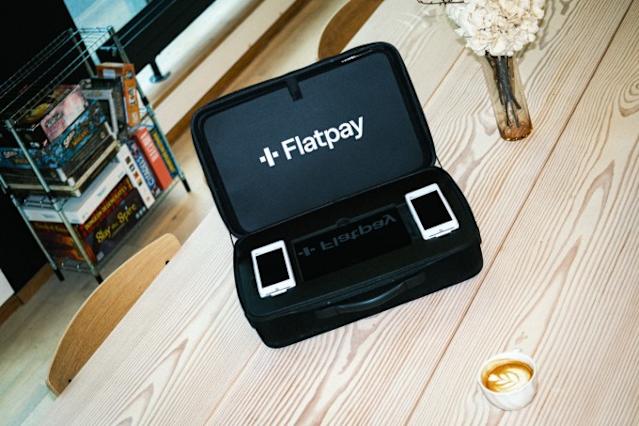
The company’s strategy includes visiting merchants directly, demonstrating devices on-site, and providing clear pricing using physical documentation.
This personal approach, combined with round-the-clock customer support, results in above-average onboarding expenses; however, management believes that the approach generates stronger adoption and faster market penetration.
Flatpay is operating in a highly competitive landscape that includes traditional financial institutions, global fintech leaders such as Stripe, PayPal, and SumUp, and startup competitors focused on niche sectors like hospitality.
Company executives argue that their simplified processes and hands-on service give them a competitive edge in winning merchants seeking a hassle-free transition.
While prioritizing human-centered engagement, Flatpay also leverages artificial intelligence for real-time functions and is testing voice-powered AI support tools.
Additionally, the firm plans to introduce expanded fintech offerings, including account and card services, as part of a gradually scaled product roadmap aimed at helping merchants adopt digital finance comfortably.
According to Janca-Jensen, Flatpay’s mission is built on simplicity and incremental adoption, allowing business owners to embrace innovation “one bite at a time.”
Source: Techcrunch

news via inbox
Get the latest updates delivered straight to your inbox. Subscribe now!